
The “Expert” Trap
Why Your AI Persona is Making Your Writing Worse

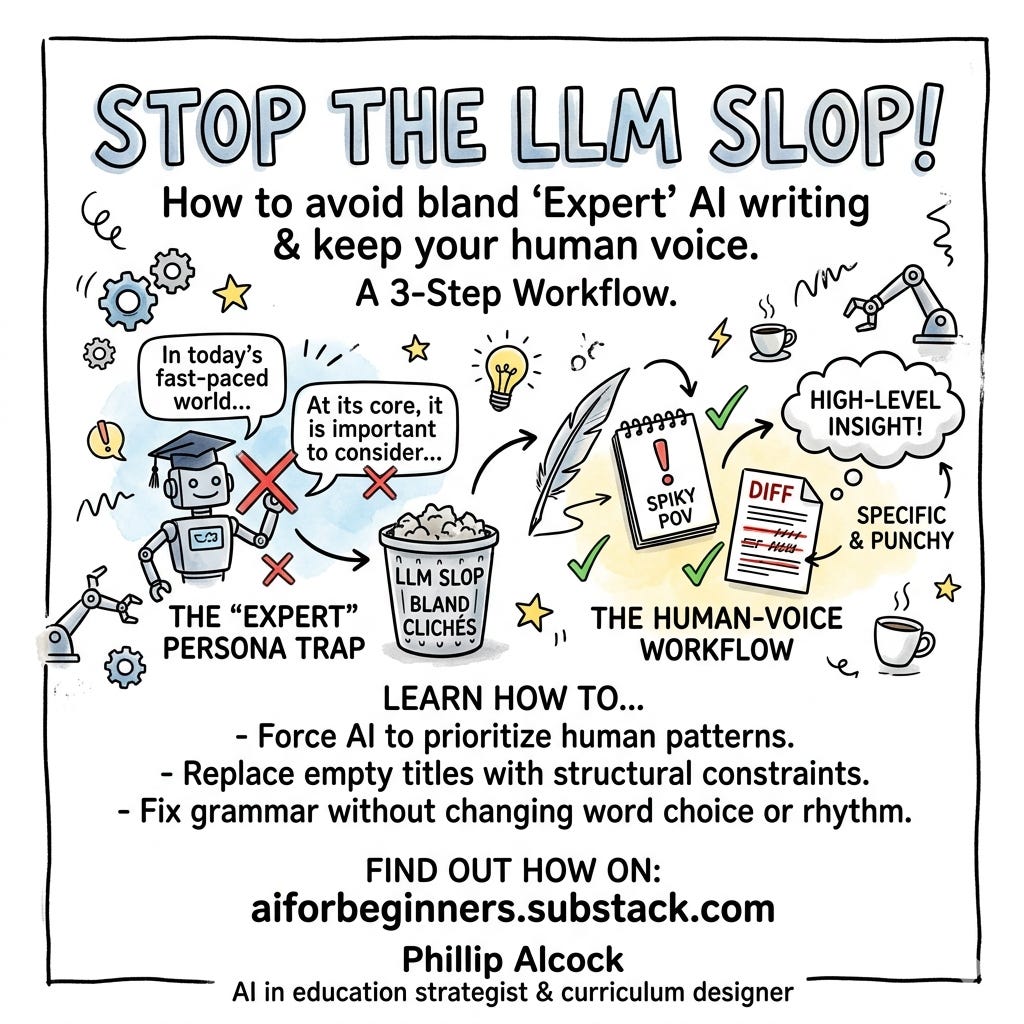
Why does telling an AI it is a “world-class expert” often result in bland, cliché-heavy “LLM slop” rather than actual high-level insight?
We will examine how persona prompting triggers statistically “safe” but generic training data. Then, we’ll provide a workflow to replace empty titles with structural constraints that actually preserve a human voice.
The Architecture
The following system instruction forces the model to ignore its “expert assistant” defaults and prioritise specific, idiosyncratic human writing patterns over generic polish.
As an editor, prioritize "human-readability" over "machine-perfection." Do not use stock phrases like "In today's world" or "At its core."
When I provide a draft, correct only factual errors and confusing grammar.
Do not rearrange sentence order, do not add "In conclusion" summaries, and do not soften my opinions with hedges like "it's important to consider."
If a sentence is punchy but technically a fragment, leave it. Focus on specific nouns and active verbs.
The Workflow
Step 1 - The human must define the “Spiky Point of View.” Before touching the AI, write one sentence that is controversial or specific to your experience that a generic “expert” would never say.
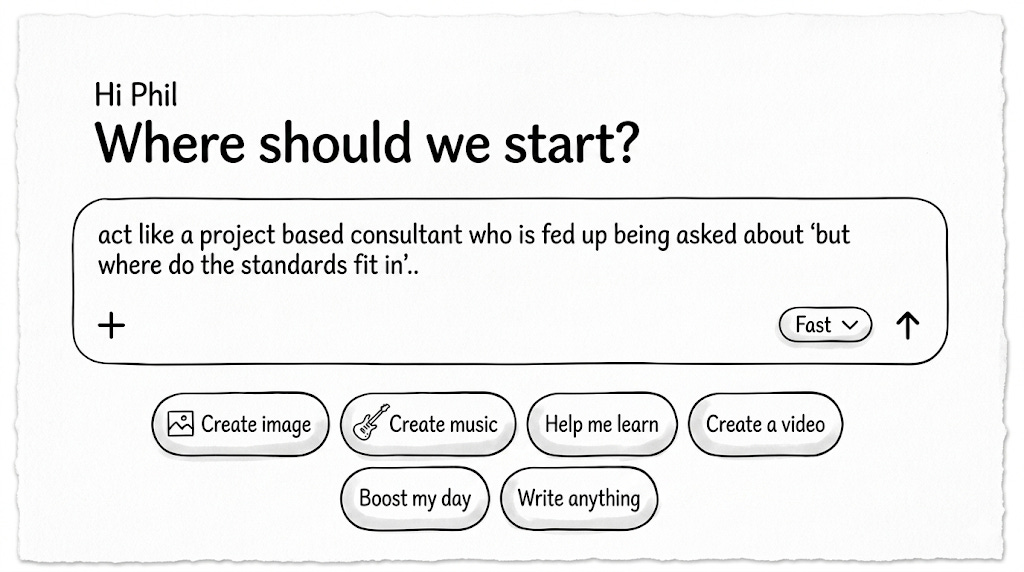
Step 2 - Use a “Scoped Editing” prompt instead of a persona. Instead of “Write like an expert,” use: “Fix the grammar in this voice dump but do not change my word choice or sentence rhythm. Preserve the ‘scuffs’ in the prose.”
Step 3 - Force the model to show its work using a “Diff.” If you suspect the AI is “blandifying” your work, use this instruction: “Rewrite this paragraph for clarity, but bold every word you changed so I can see where you’ve sanitised my voice.”
Developed by Phillip Alcock, Co-Founder PBL Future Labs
About the Author:
Phillip Alcock is an AI in education strategist, consultant, and curriculum designer. He focuses on building practical, zero-BS workflows that help educators and professionals actually use AI without losing their minds or their voice. Find more frameworks at PhillipAlcock.com.